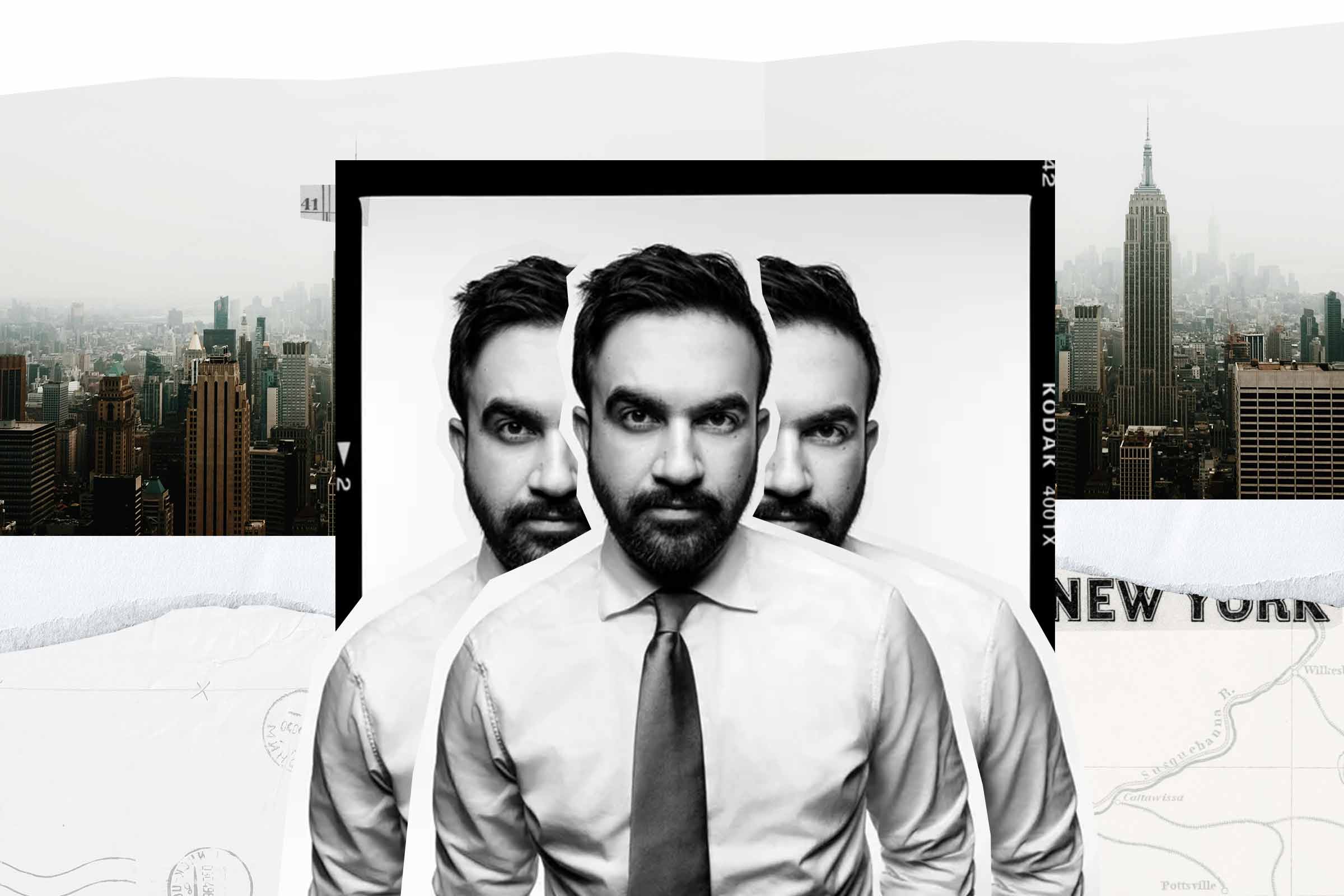
It feels like a little glimpse of hope, doesn’t it? A 34-year-old socialist Muslim with a Brooklyn-esque ’stache, who frequently calls strangers on the street “brother” in his social media clips. Who hits the stage on election night with Ja Rule’s “New York” as his anthem. Who ran on a platform that basically said “make the city suck less for real New Yorkers” (a.k.a. not the elite). And who, from a European perspective, is being praised as a potential sign that — maybe, just maybe — the US is not a completely lost case yet.
It’s good to see. It’s soothing. It also gives us hope that the New York we fell in love with years ago might not be gone-gone. That it was just slumbering. And that it can be brought back.
Another thing that gives us hope: To see how the Mamdani-campaign has found a way to hijack marketing mechanisms that were born out of hype culture and turned them on their heads.
The Hype-Brand Playbook, Adapted
Think limited sneaker drops, artificial scarcity, community-building through exclusivity, price as barrier of entry. Think Supreme, Yeezy (well, before the swastika shirts), Palace, and today’s CRTZ. They took the playbook, adapted it, and created impact.
In a New York Times piece after the election, campaign adviser Zara Rahim is quoted describing the approach like this: “Forget the New York conjured by political strategists. Make a campaign about the actual New York City.”
And they did. The campaign opted against producing high quantities of merchandise, and instead kept it exclusive. What they called “the Mets bobblehead strategy of merch” is actually a translation of hype culture mechanics:
The campaign organizers produced special items (collectability) in limited quantities (scarcity), that were only available in certain time windows (exclusivity). A blue beanie, paper fans, or bandannas — a selection of products that, in the context of a political campaign, conjures the absurdity of some of the wilder Supreme drops we’ve seen, like the saké set, the money gun or the infamous brick, of which streetwear culture site Highsnobiety said it showed Supreme’s “sadomasochistic relationship with its fans.”
But while hype brands use these mechanisms to produce a staggering resale market fueled by toxic exclusivity, the Mamdani campaign managed to turn that logic on its head — by rethinking what revenue means for them.
Because the exclusive Mamdani items couldn’t be bought, which is an interesting move, as campaign merch is a vital income stream for most political US campaigns. Instead, Mamdani merch, says the NYT, “could only be earned, incentivizing supporters to give not money but time”.
This way, they democratized belonging, lowered the barrier of entry, and created community through participation. No exclusion, no monetization, but immense value creation. It’s brilliant.
“In a post-Covid, early-AI-world, culture is most effectively built IRL.”
The campaign doubled down on tapping into the post-Covid trend of community building through events, e.g. by hosting a citywide scavenger hunt or a soccer tournament at Coney Island. Both events were laughed off as gimmicks by the competition, but ended up attracting thousands of supporters — of which “many later became part of an unmatched army of volunteers”, as the Times article concludes.
That same mechanic has driven brand phenomena like the On Running clubs or Lululemon’s yoga pop-ups, and is another great reminder that in a post-Covid, early-AI-world, culture is most effectively built IRL first.
Purpose-Driven Brands Take Note
What makes this so relevant for purpose-led brands is how the campaign utilized these mechanisms to reframe exclusivity.
Fascinating, isn’t it?
A young team of advisors, “not one of whom had ever run a citywide campaign”, who quite naturally tap into hype culture mechanisms, but manage to flip the script, make it feel inclusive, positive, uplifting — that is a model that can and should be emulated. It’s a smart hack to serve the logic of late stage capitalism, our inherent tribalism, and our deep wish of belonging to something bigger, but without the cynical, profit-driven, sped-up hype cycles of what can only be described as artificially empowered fast fashion with a storytelling twist.
In a time where Europe can sometimes feel like the remaining bastion of hope of the Western world, trapped between an aggressor in the East and a dismantling democracy that’s being turned into a dictatorship before our very eyes in the West, now more than ever we need tools to tell better stories for mission-driven initiatives.
With far right parties on the rise, and a widely unaddressed post-pandemic mental health toll, with a grim future threatened by climate change and power hungry oligarchs who can buy the public dialogue (Twitter) as well as unlimited political access (the guy who bought Twitter) and have successfully dismantled our shared understanding of what the truth is (that guy and the other guys — but be assured, it’s all guys), how can we create aspiration for the things that are still worth fighting for? How can we make “being the good guy” attractive again, attractive enough to fight back instead of giving in to the temptation of just “going with it”?
Zohran Mamdani’s win really does feel like a small glimpse of hope. Hope that it’s still possible.
As impact-driven brand builders and marketeers, it is our job to learn from this success, analyze and use these tools, and create momentum for good causes just like this campaign did for Mamdani.
Ironically, it turns out that hype culture, despite embodying everything Mamdani’s movement resists, can deliver concepts that translate. We just need to start being honest about what really drives people, what pushes our buttons — and then make the choice to not be cynical about it, but use it for good.
Those are our thoughts on the matter.
Send us yours.