
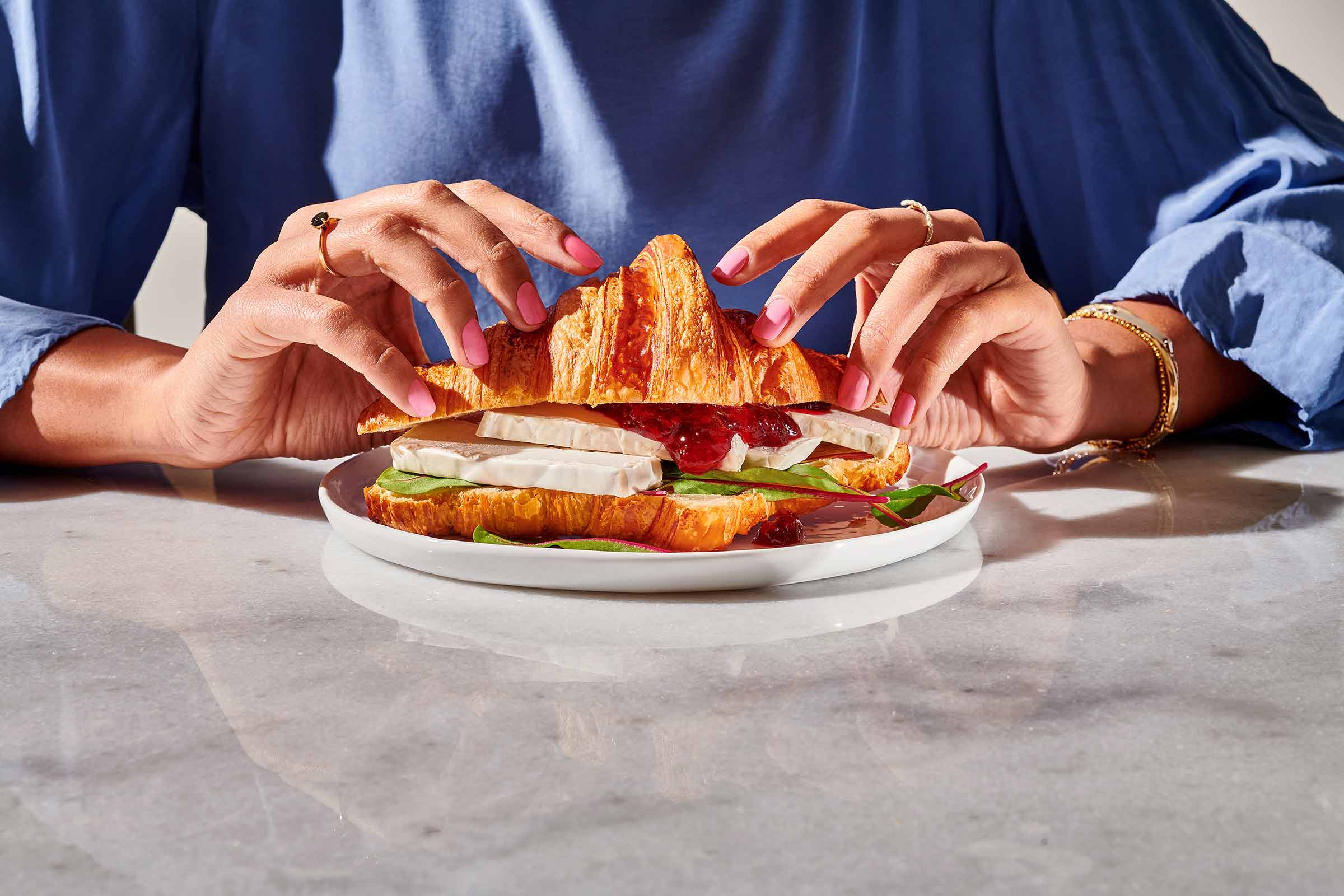
Let’s be honest: Most vegan cheese alternatives in the market are not good.
I’ve been vegan for over a decade and I’ve seen and tried a lot of stuff. The way I see it, broad strokes, there are two categories of vegan cheese:
1. The Outliers
Great products with amazing taste. NYC’s Rind or Switzerland’s New Roots come to mind. But these are either not widely available and/or specialty-cheese-level expensive. Which is fine, I love to spoil myself sometimes, but it’s never going to be an everyday kind of occurrence. I have bills.
2. The Everydays
Then there are the vegan cheese options closer to price parity with dairy cheese, but these traditionally have different problems: They either don’t taste good. Or they taste okay but are unburdened by nutritional value. Yes, the product is “plant-based”, but one might wonder if modified starches and artificial flavoring should be considered food. Or plants.
Also, call me weird, but I’m not a big fan of putting what’s basically a slice of pressed coconut oil on a sandwich. That’s just empty calories for a taste sensation that’s not cutting it.
The Studio’s Cheesiest Rebranding Journey Ever
All of the above describes pretty well why we’re so stoked for Very Good Looking to have played an ongoing role in the success story of German vegan cheese company Mondarella.
I’m heavily biased — totally drank the Kool-Aid — but in my perspective, they managed to create a third category of vegan cheese alternatives:
- Mass-market ready: They are closer to price parity than any of the specialty cheeses.
- Clean label: All-natural ingredients, no artificial flavors or colors, free of modified starches, or cheap tropical oils.
- Delicious: While ticking all of these boxes, they also put out some of the tastiest vegan cheese options in the market today.
Therefore, we were thrilled to be asked to give Mondarella a new look, new packaging, new everything.
The brief: What does a vegan cheese company that has achieved all of the above look like today?
To answer that question, we went on the most thorough rebranding journey in the young history of our creative studio.
The Right Questions to Ask
Where to start? Well, with asking the right questions.
We spoke in depth with the Mondarella team about their wishes and goals and combined the learnings from those meetings with our intrinsic, deep understanding of both the category and the company’s product line, and what makes them different.
But there were more ingredients vital for a successful rebranding effort.
We looked at the competitive landscape.
We finetuned our idea of the target audience: Who are we talking to? Who do we need to reach? Where’s the biggest potential for impact? Vegans? Vegetarians? Flexis? Veggie-flirts? Omnis? How do they live, what are their pain points, and what problem can Mondarella solve for them?
One big question was: Are we going for “plant-based” or “vegan” in our communication? How do these words land with the target audience, what do they convey to them? (We were able to answer this one quite clearly.)
We also consulted with award-winning packaging design specialist Alex Brunner to gather new impulses from someone who’s (1) a seasoned vet in the broader field and (2) had a fresh perspective on the brand.
And we hung out in supermarkets, looked at shopping behavior and placements, trying to understand how the category was chosen to be presented by supermarket staff in different retailer locations with varying floor layouts. What are our potential brand neighborhood(s), and what should we look out for “in the wild”?
“The new branding scored a whopping 94% desirability with young shoppers.”
We also picked apart some of the most recent and bold rebrands in the greater plant-based space: Why did Impossible go red and meaty, while Beyond went green and healthy? What’s the messaging and targeting behind these choices, and are any of these routes informative for our process?
Also very important: What’s the feedback from retailers, what do their buyers tell Mondarella’s sales team? What does their experience tell us about the category and what’s working with consumers today?
And finally, every step of the way, we tested results. As soon as the first design routes were established, we got renowned marketing research provider Appinio involved and aligned design choices with consumer data: What did people react to? What stood out on-shelf? (Love a good heatmap!) What said “delicious” and made people want to pick up the product?
In the end, we scored #1 in the on-shelf comparison, with about 86% of disposition to buy with flexitarians, and a whopping 94% desirability with a younger demographic – which was important, as they are very likely to drive the switch from the adopted brand choices of their parents to a plant-based alternative.
Stand Out Where It Counts: On Shelf
What also feels like a big success is to see the new packaging on shelves in the real world now, and to bear witness to our plans working:
We successfully gave Mondarella the look of the category disruptor they worked so hard to become. The colors are bright and pop off the shelves, the illustration layer we integrated gives it a playful note and the standout is, well… outstanding. (Sorry.)
“For consumer brands, packaging is some of the most valuable marketing real estate there is.”
Rolling out this rebrand across other touch points (like website, social media, trade show booth, and various other marketing materials) with the packaging design leading the way has proven to be an effective route. After all, for consumer brands in retail, the packaging is arguably the most valuable chunk of marketing real estate there is.
In the words of Marty Neumeier: “For many products, the packaging is the branding.” In supermarkets, as Neumeier writes in The Brand Gap, “it is possible for a packaging to reach 100% of people shopping in that category.”
It’s done, it’s in the world.
A big thank you to the team at Mondarella for the trust, and especially to Fatou, marketing manager of our dreams, for going on this wild ride with us. We did it!
And now, some shout-outs to the team:
Creative Director: Tina Tenkmann
Packaging Design Consultancy: Alex Brunner
Account Lead: Eric Mirbach
Project Management: Laura Sinnhuber
Packaging Design, UX/UI Design: Sophie Shand
Asset Design, Motion Design: Denis Obmaichin
Copywriting: Farnaz Riedel
Illustrations: Paulina Wiczanowska
Photography: Antonios Mitsopoulos
Food Styling: Candy Lexa
Web Development: André Prata
Client Service Intern: Safiyah Dawuni
Design Intern: Dara Amin
Life is hard, eat Soft Blanc.